
Preserving tomatoes by making tomato sauce is a go-to for my household because it can be used for so many recipes. You can make flavored sauces, but I prefer a pretty simple sauce that is more versatile for many recipes. If you refrain from heavy spices, you now have a simple base sauce that can be used for spaghetti sauce, chili, stews, Cajun soups, etc.
Below are directions for those with a sieve and those without. However, I highly recommend investing in a sieve. It is well worth the money, not only to skip some steps and make the process easier, but to make the end product smoother with fewer seeds and such. You could use a large strainer over a pot or bowl, but it’s much harder to work the chunky sauce through.
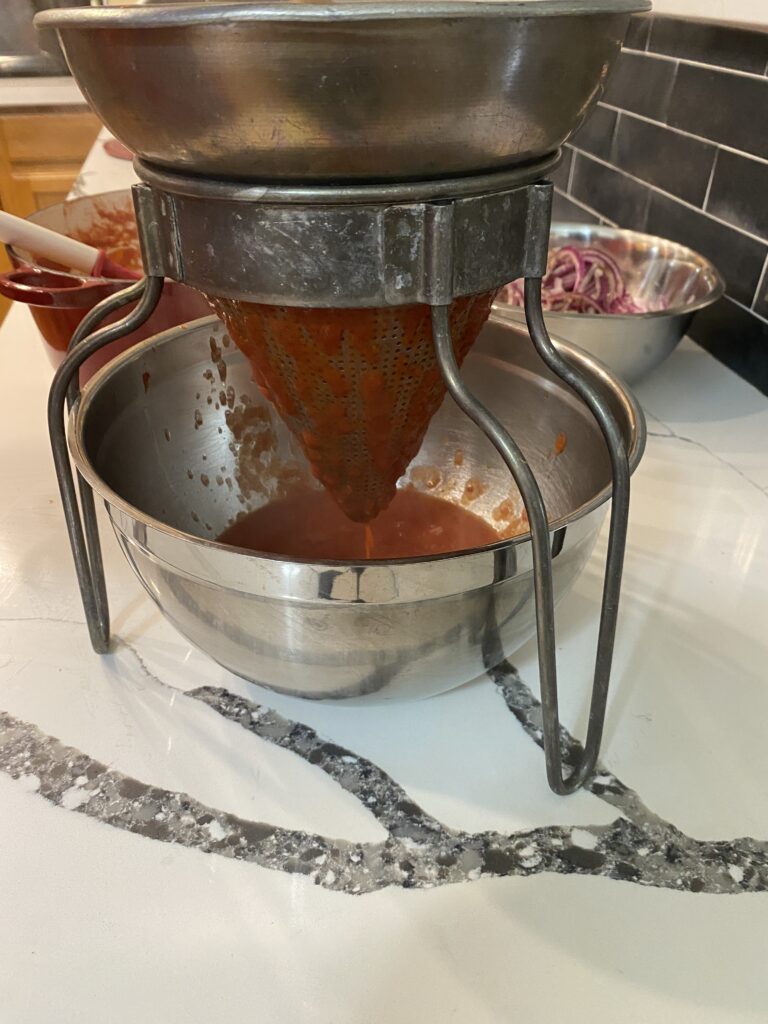
What the heck is a sieve? You’re not the only one wondering. Promise! A sieve is specifically designed for this exact type of process. It can also be used in soups, and many older recipe books actually call for it. Yes, you can use a blender, but that will leave seeds and smaller pieces in your end product. This article should clarify what I mean by photos of the process, but you can also check out the link below to see what they look like and even purchase one on Amazon.
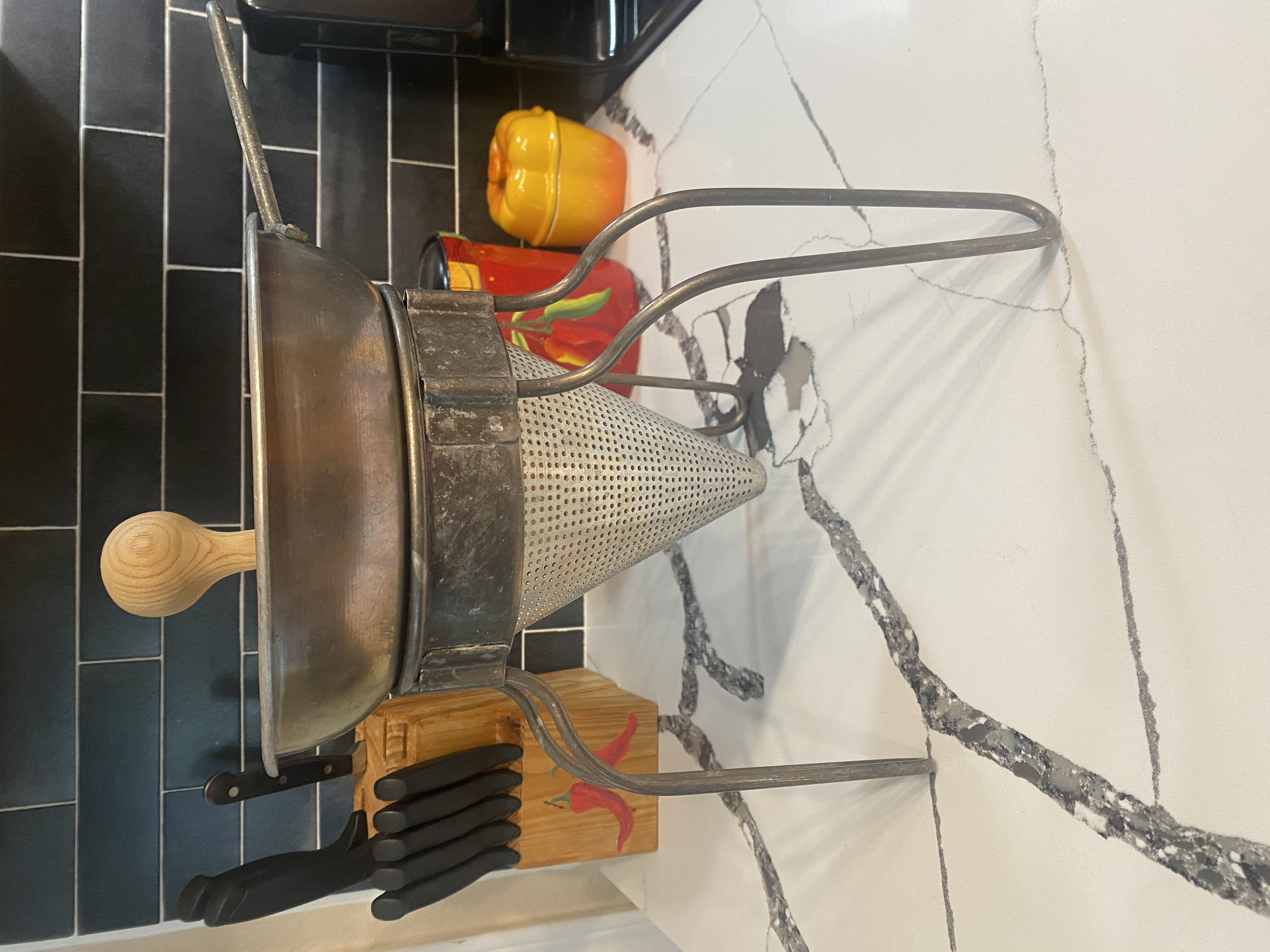
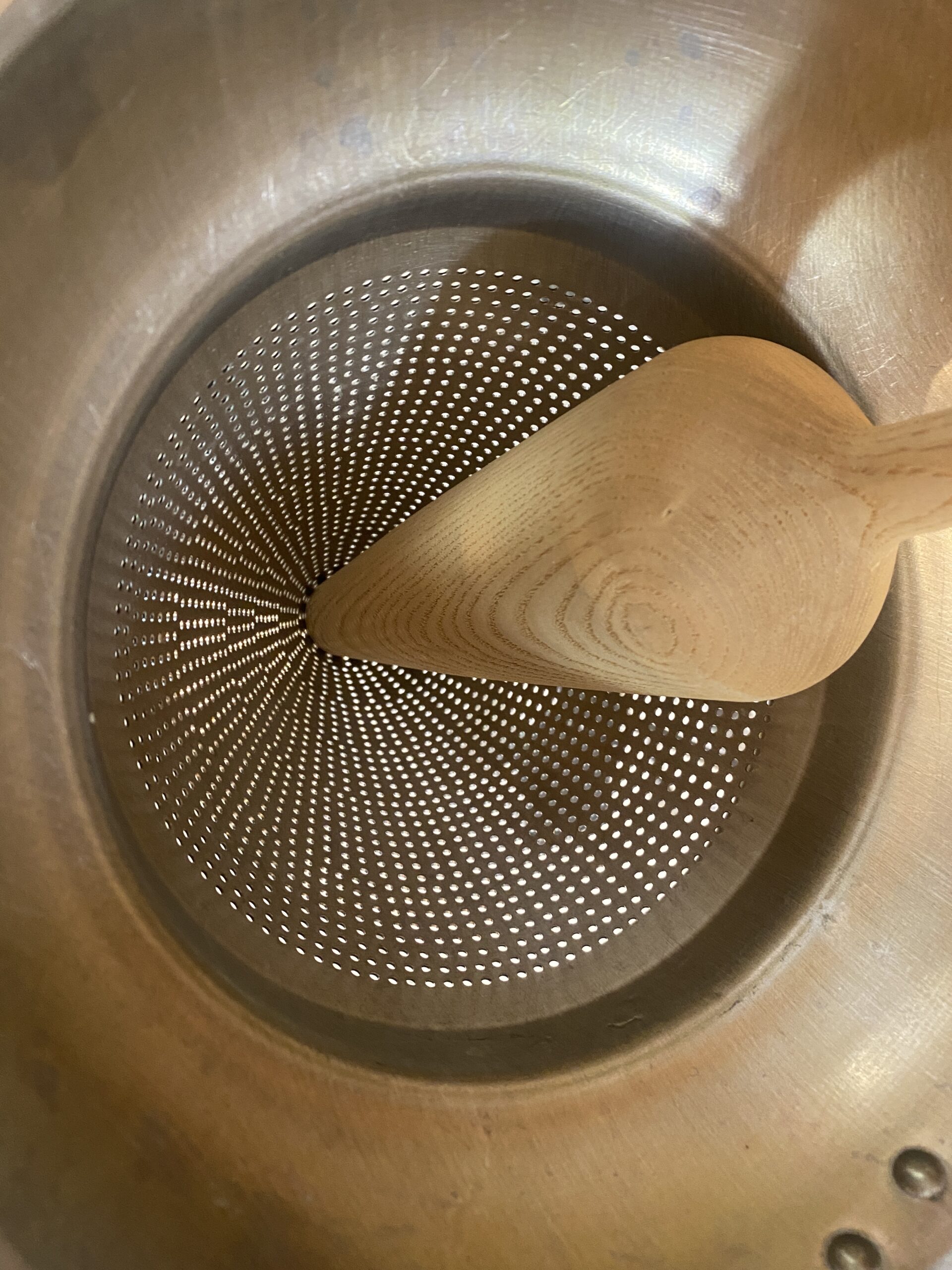
What do you need to make tomato sauce?
- Tomatoes. I would recommend having at least 3-5 pounds to make the process worth it. Remember, each pound will fill a 16-oz. or pint jar, on average.
- 2 Large pots. 1 to make the sauce and 1 to process the jars. The one for processing needs to be tall, so a large stew pot is a minimum
- Salt & pepper to taste.
- A sieve or blender to smooth out the sauce
Getting started making tomato sauce
People sometimes ask if they need to peel tomatoes for making sauce. Well, it depends. To sieve or not to sieve? Peeling isn’t required if you have/use a sieve, but unfortunately, you are without one. You could technically strain the sauce, but those tools aren’t designed for this, and it will be a bit harder and messier to get all the skins out.
- Starting with a sieve
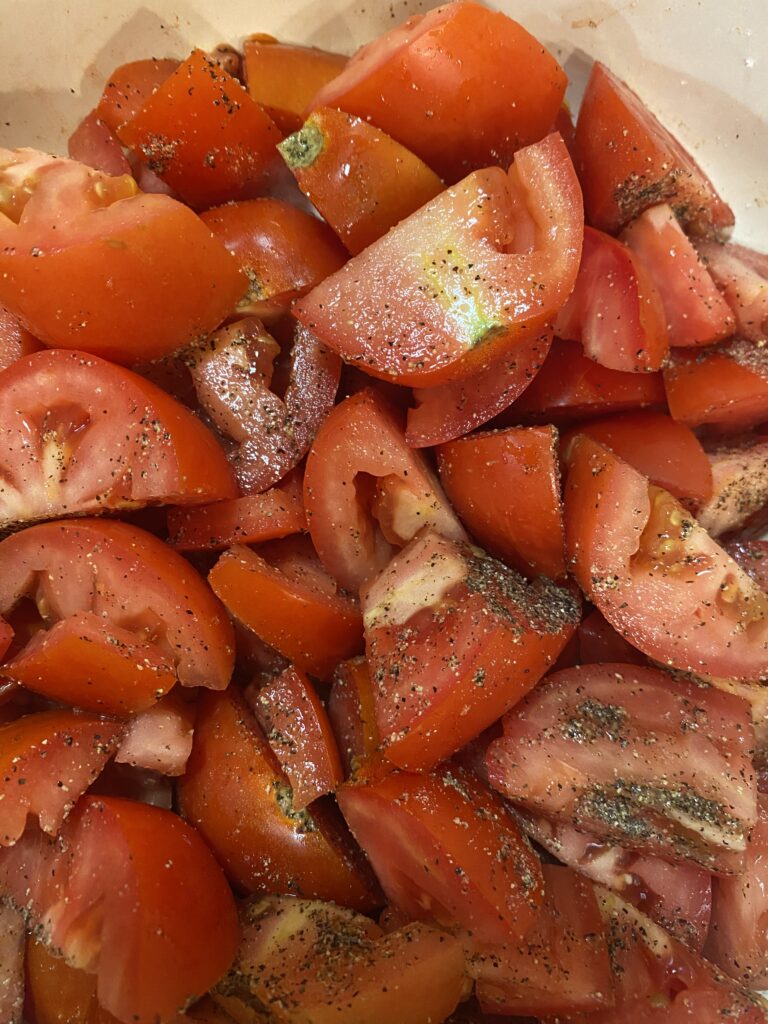
Rinse tomatoes and cut into small pieces. Not quite a dice. You can go as big as quartering the tomatoes, unless it is the “big boy” variety—those I’d do in at least eight pieces. Don’t worry about trimming them. The sieve will take care of this later!
Put pieces in a pot, I use a Dutch oven, with salt and pepper to taste. As you can see, we love some black pepper!
Cook on medium heat, stirring to prevent burning on the bottom.
- Starting without a sieve
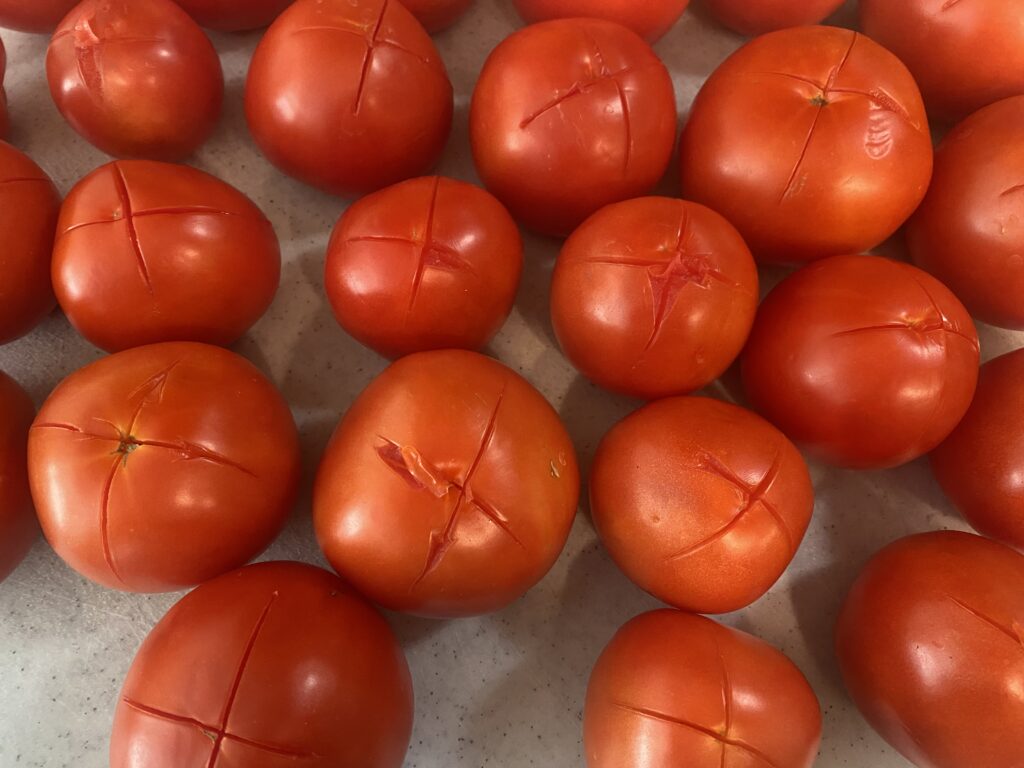
Start by cutting an X into the bottom of the tomatoes and placing them on a baking tray, “X” facing up.
Put in the oven, preheated to 425 degrees, for about 10 minutes. Once you pull them out, the peels should come off easily. Handle with care. They are 425 degrees on the surface. This should go without saying, but…you know.
Now cut into quarters or eighths and put into a pot, I use a Dutch oven, with salt and pepper ( to taste) and cook on medium heat, stirring to prevent burning to the bottom.
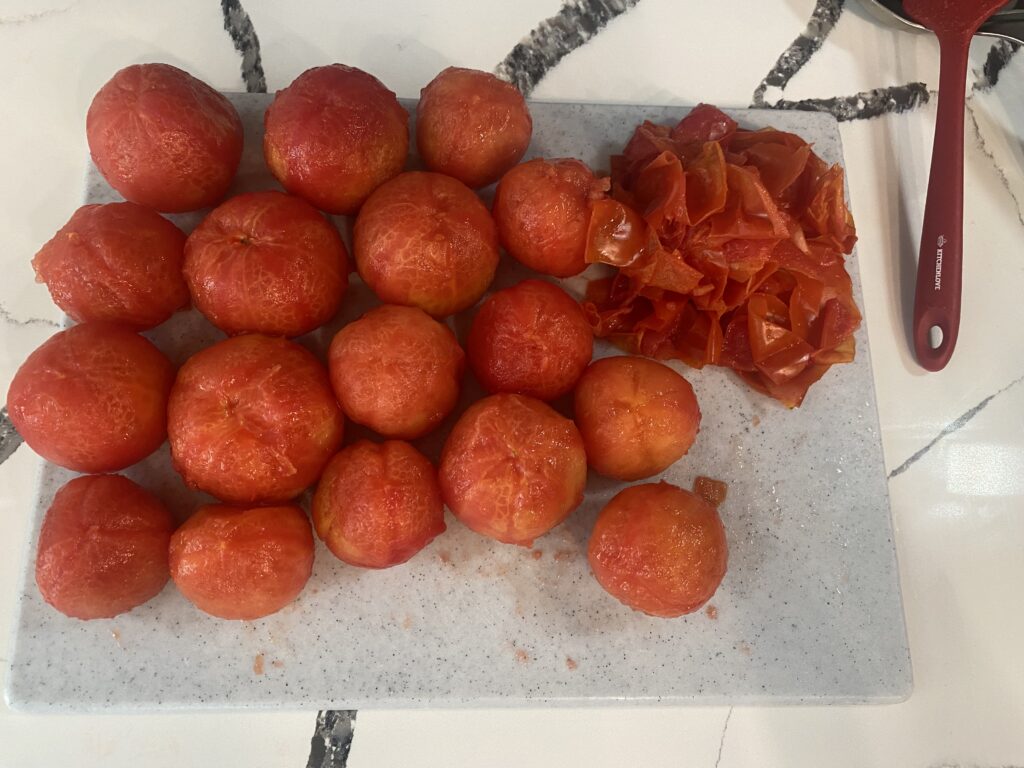
Cook Tomatoes to Soften
If you are making a flavored sauce, add herbs and spices now to cook into the sauce. See below for a recipe for Italian Tomato Sauce. Add all ingredients at this stage.
Cook on medium heat until the tomato pieces are soft enough to cut with the spoon you’re using. This can take between 30 minutes and 1 hour, depending on the number of pieces and the pot’s size. Remember to stir often. This is definitely not a “set it & forget it” process. The bottom pieces can burn and/or stick to the bottom if left for too long.
This part of the process is where a Dutch oven comes in, especially if you replace the lid after stirring. Because they are cast iron, they hold and retain heat better than many pots, which really speeds up the cooking process.
Smoothing out the Tomato Sauce
In this stage, you’re basically making tomato sauce from diced tomatoes. They’re just heated up and ready to process!
No matter which option you choose below, once the pot is empty, please give it a quick rinse to ensure no skin particles or debris remain stuck to the sides.
- Processing Without a Sieve
Ladle tomato sauce into a blender or food processor. You may have to do this in batches, putting them into another container until the pot is emptied.
Blend until smooth. Scraping down the sides may be needed to ensure everything passes through the blades.
Pour the sauce back into the pot for further cooking. If you have a mesh strainer, pour the sauce through it, catch any missed skin pieces, seeds, or larger pieces that didn’t cook properly, and discard them.
- Processing With a Sieve
Put the sieve over a bowl or pot and ladle sauce into it in small amounts. Rotate the wooden pestle around the sieve. This will force the sauce through the holes and draw it out, leaving behind all the skin, seeds, and larger chunks.
Repeat this process until all the sauce has been sent through the sieve. Remember that we didn’t peel or trim the tomatoes, so we are removing everything during this process.
When you think all the sauce has been pushed through, rotate the pestle a few more times to be sure, and discard the skins. If you have a compost pile, these are ok to add to it.
Pour or ladle sauce carefully back into the pot.
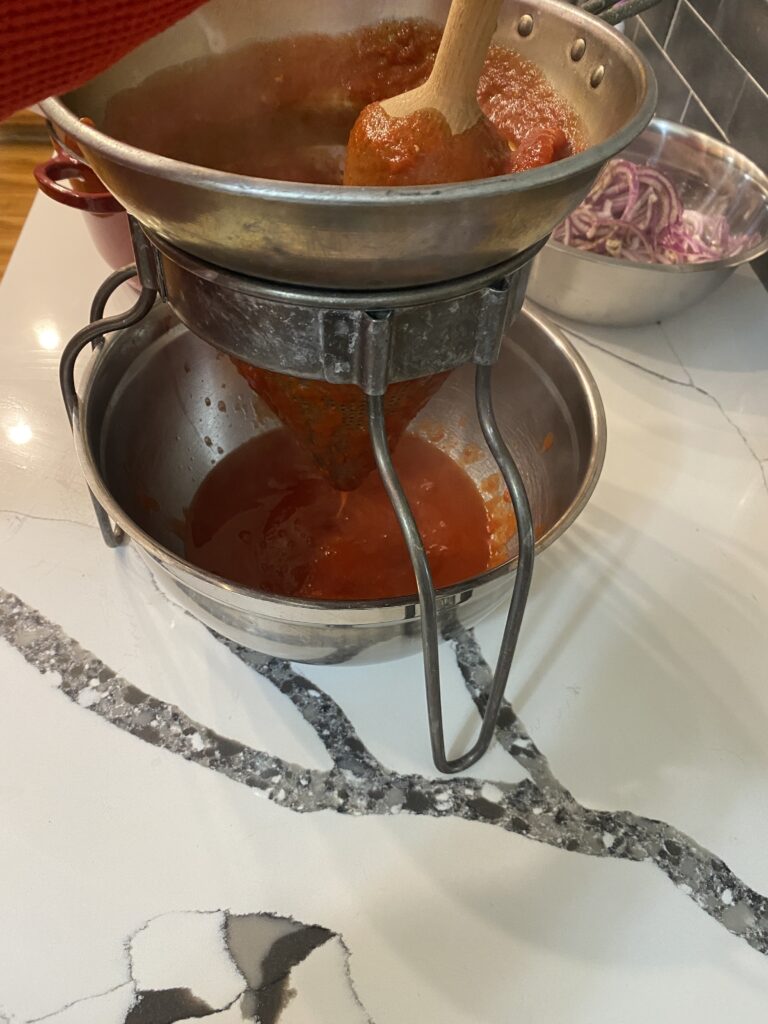
Condense Tomato Sauce
Now simmer until needed. This is how you thicken tomato sauce to your preferred consistency. If you are flavoring, taste it and add more herbs and spices as required.
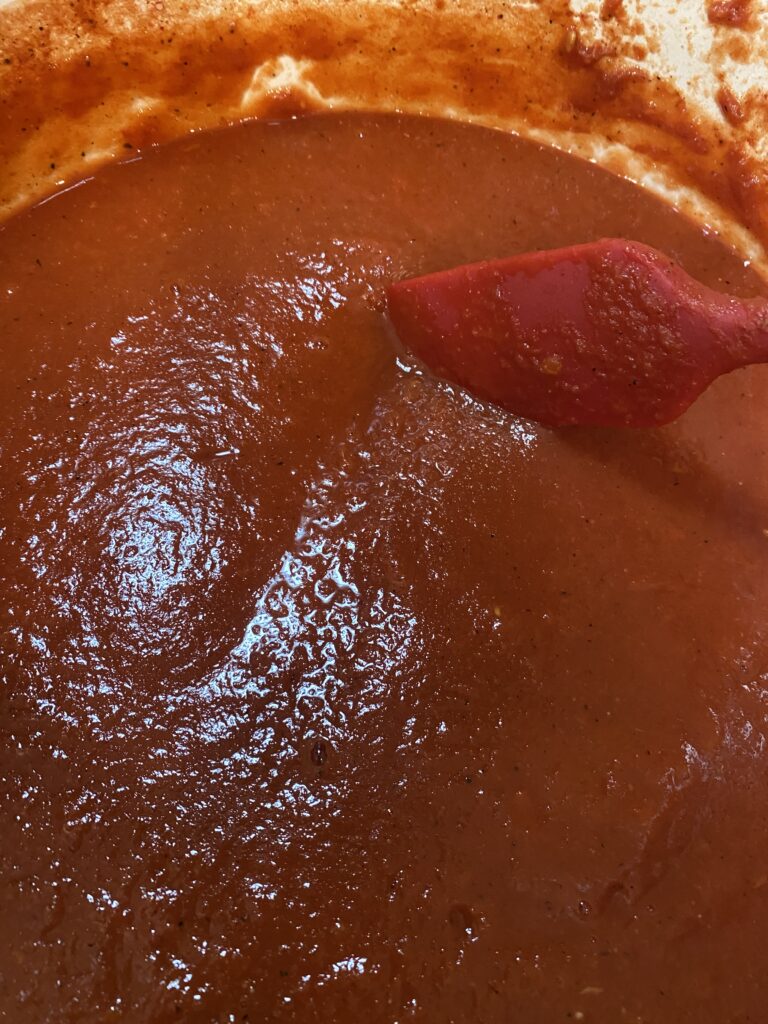
Italian Flavored Tomato Sauce
- 4 pounds of tomatoes
- 4 Tablespoons of butter
- 8 cloves of garlic
- 1 tablespoon dried oregano
- 1 tablespoon dried basil
- 3 tablespoons parsley
- 1 medium onion, coarsely chopped
- 1 carrot, coarsely chopped
Use Your Tomato Sauce Now or Preserve It for Later
Once your tomato sauce reaches the thickness you prefer, you can use it immediately in pasta, soup, casseroles, or other favorite recipes. You can also refrigerate or freeze the sauce for later.
To make the sauce shelf-stable, follow the canning instructions below. While you’re waiting for the sauce to condense, you can start prepping jars and other canning supplies to save time.
Whether you use it tonight or preserve it for another day, homemade tomato sauce is a simple way to turn fresh tomatoes into something useful and delicious.
Small Steps. Meaningful Rewards.
📤 Share the Knowledge
Know someone who could benefit from this article? Share it and help another gardener grow with confidence.
Gardening is better together. Join our free Facebook community to ask questions, share your progress, and learn alongside other gardeners.
📖 Related Articles
Easy Diced Tomatoes
Homemade diced tomatoes are perfect for soups, stews, casseroles, chili, tacos, and hundreds of other recipes. Learn how to prepare and can diced tomatoes so you’ll always have fresh garden flavor waiting in your pantry
Canning Tomatoes
Now that you’ve made homemade tomato sauce, learn how to safely can it for long-term pantry storage. This beginner-friendly guide walks you through every step.
Canning 101
Want to learn more about canning? Canning 101 is your complete beginner’s guide to home canning, covering equipment, safety, water bath canning, pressure canning, and the essential skills needed to preserve food with confidence.
🛠️ Product Links
This page contains affiliate links. If you purchase through one of these links, we may earn a small commission at no extra cost to you.
Thank you for helping support Small Scale Homestead!
Countertop Sieve/Strainer
A countertop-style sieve like the one used in this article makes processing larger batches of tomatoes easier while keeping the strainer steady as you work.
Over Bowl or Pot Strainer
A more compact option that rests directly over a pot or bowl, making it easy to strain tomatoes without needing a separate countertop setup.
Product
A colorful set of everyday silicone kitchen tools that are heat-resistant up to 425°F. Available in lots of fun colors to match your kitchen or personality.
Leave a Reply