
Turkey stock once a year, chicken and vegetable stock here and there throughout. Making your own stock is not only rewarding when you reach into the pantry, but it can also be much healthier!
You get to control the salt levels, preservatives, and ingredients used, so your family doesn’t have to endure any more unnecessary chemical intake.
Not to mention the cash it saves. Yeah, buying broth or stock at the store isn’t super expensive, but prices keep going up. A box of organic chicken stock at my local store is $2.48 for 32 oz. However, making your own….costs nothing!
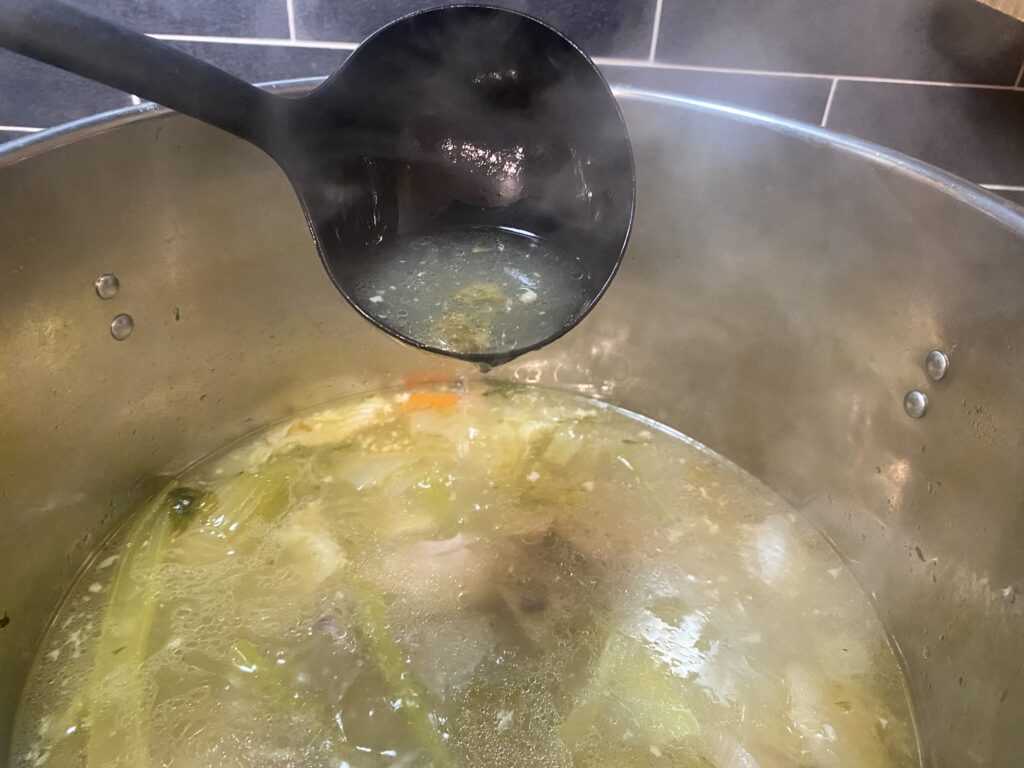
Saving Scraps
Wait. How can it be free? Other than your time, it can be. Use the items you’re likely throwing out regularly. You can also use pots you already have on hand!
You can make so many different broths simply by saving your kitchen scraps.
These are items that you already have and have already paid for. Why not save them in freezer bags? Once they add up, you can invest in some stocks!! (Sorry, couldn’t help it)
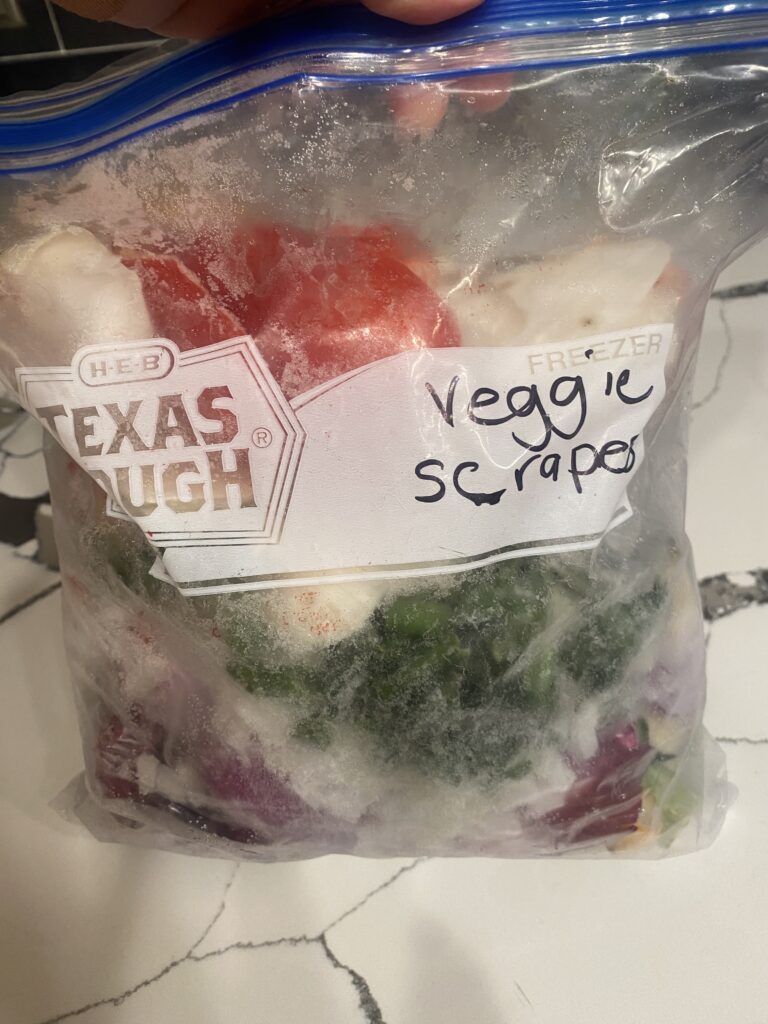
I have at least two scrape bags in my freezer, which are being filled at any given time. One is chicken fat, skins, and bones & the other is veggie scraps. This one is onion ends and peels, celery ends and leaves, carrot tips and peels, bell pepper veins and seeds, etc.
There are only a couple of things I don’t use in the veggie scrape bags. One, it’s tomatoes because they change the flavor too much, and you can save them up for sauce & potato scrapes, because I really don’t want the extra starch for no reason.
What makes a good stock?
The basics of a stock are honestly what make it so good. It’s just a primary protein source, veggies or veggie scraps, and water. Some people will add aromatic herbs like bay leaves and thyme.
The main things that make a good stock are the use of bones and the condensing of the water, which gives it flavor! So if you save up the scraps from chicken and veggies, put them together, add water, and you are set with a pot of stock!
What you need
- Scrapes from meat and/or veggies
- A large pot for cooking and reducing the stock. A stew pot or Dutch oven will work great!
- Large strainer and/or colander
- A large bowl or a second pot for straining into
How to make homemade stock
These are very general instructions that can be used for meat or vegetable stock. The primary process is the same either way. It’s just a matter of what food products are used. Happy stocking!
Put all scraps into a pot
Take preferred scraps and put them into a large pot. You can use just the veggie scraps or both the meat and the veggie scraps. Making chicken stock is common since so many recipes call for it.
You are, of course, welcome to use all fresh vegetables or bones if you do not have a collection of kitchen scraps. The result will be great no matter what.
Thoroughly cover in cold water and add herbs, if you choose. Common herb additions are bay leaves, thyme, or even oregano.
I typically do not add herbs, as I want the stock to be as versatile as possible for canning and storing. However, if you are making a specific recipe, adding herbs now is a great way to enhance your dish’s flavors!
Cook at a simmer
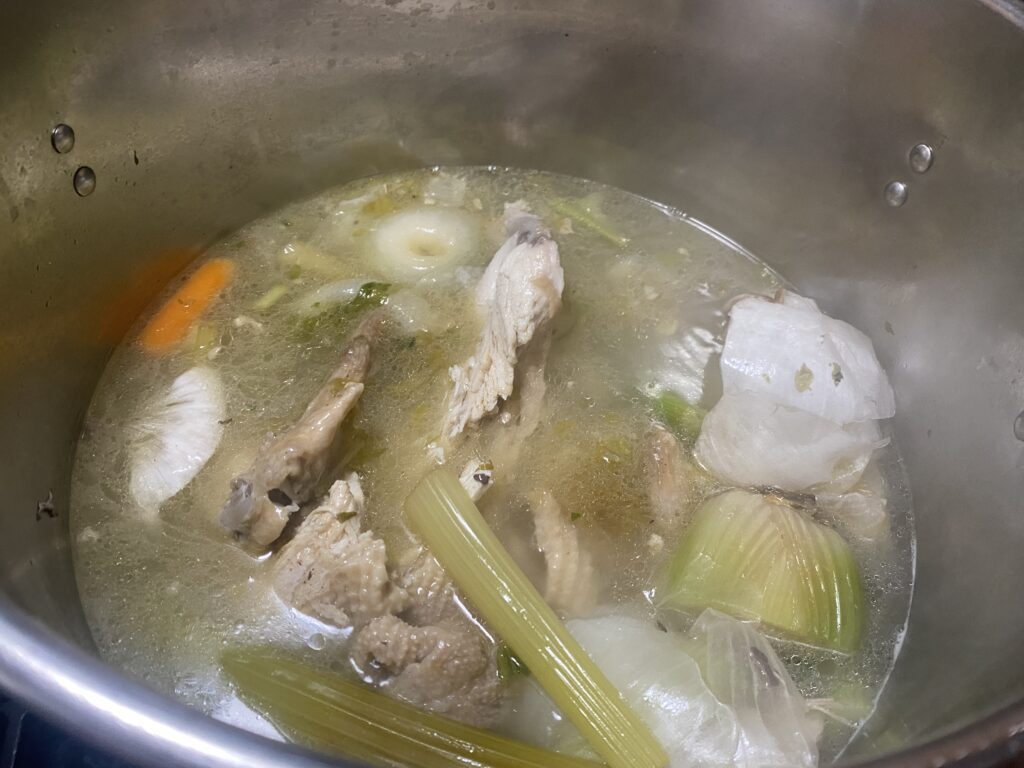
Bring everything to a boil and reduce the heat to a steady simmer. Simmer time depends on the stock being made. If you are making vegetable stock, simmer for about an hour to an hour and a half to allow the vegetables to release all their flavor and nutrients.
However, meat stocks will need to simmer for at least 4 hours. I like to keep them going for 6 hours to make the stock as rich and fortified as possible. You can actually simmer for up to 24 hours, but…wow.
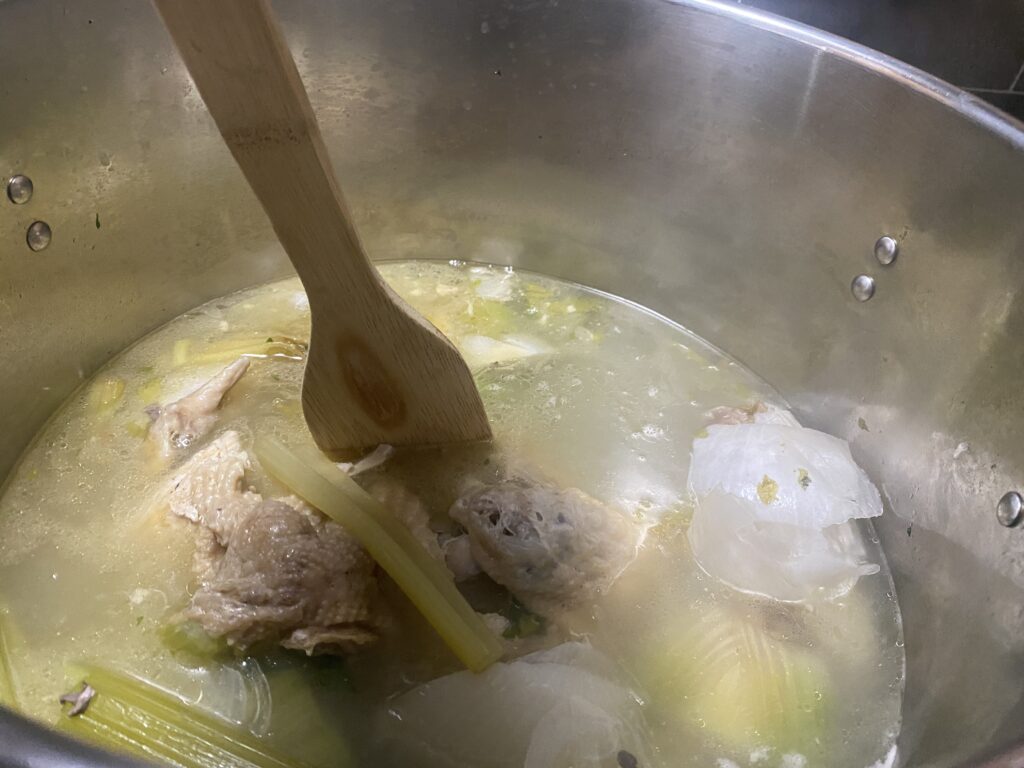
Keep in mind that you may need to add water along the way to keep everything covered up. If using whole chicken or turkey carcasses, stir and move the bones around to separate everything as it cooks.
Do not boil! Simmering allows for more efficient extraction of flavors and nutrients, especially from bones. Boiling will also change the color, but that doesn’t really matter for the flavor.
Strain
Once everything is cooked and simmered for the proper amount of time, strain to remove any food bits. If making a veggie stock with fresh vegetables for a particular recipe, you can likely skip this and keep the pieces in your dish.
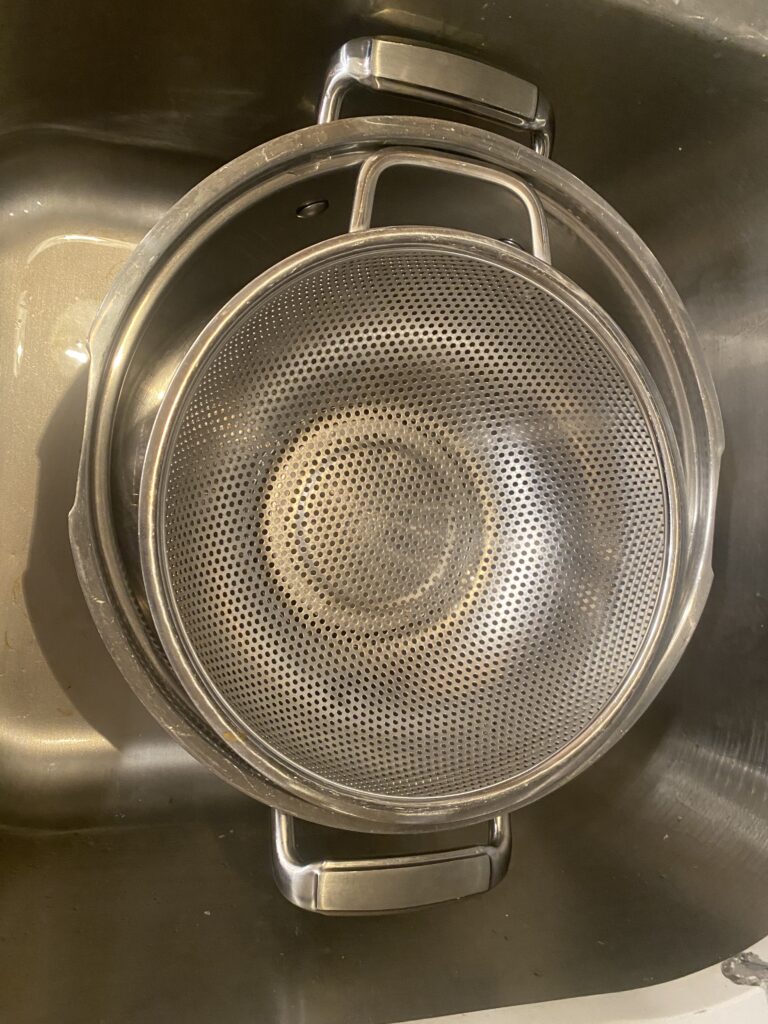
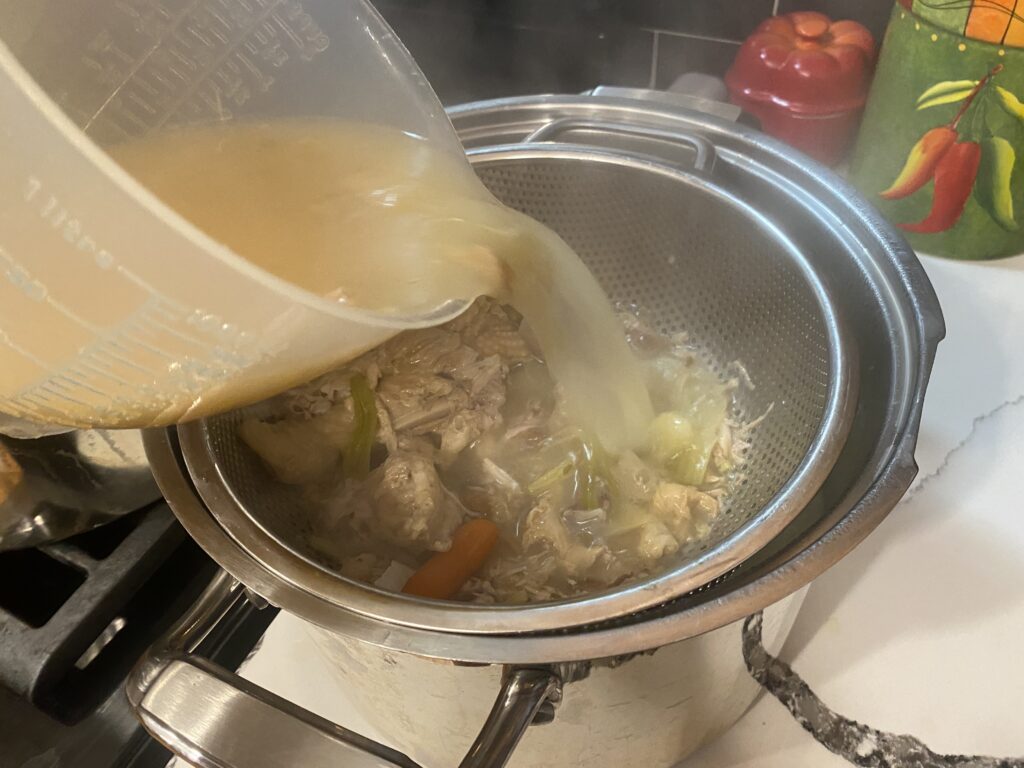
I like to double-strain everything since it will be going back and forth between containers anyway. Once is with a colander over a large pot. I get as much juice out as possible and run through the strainer first using a measuring cup. This makes the pot weigh the least when pouring the last of it out. So much easier to handle and less messy!
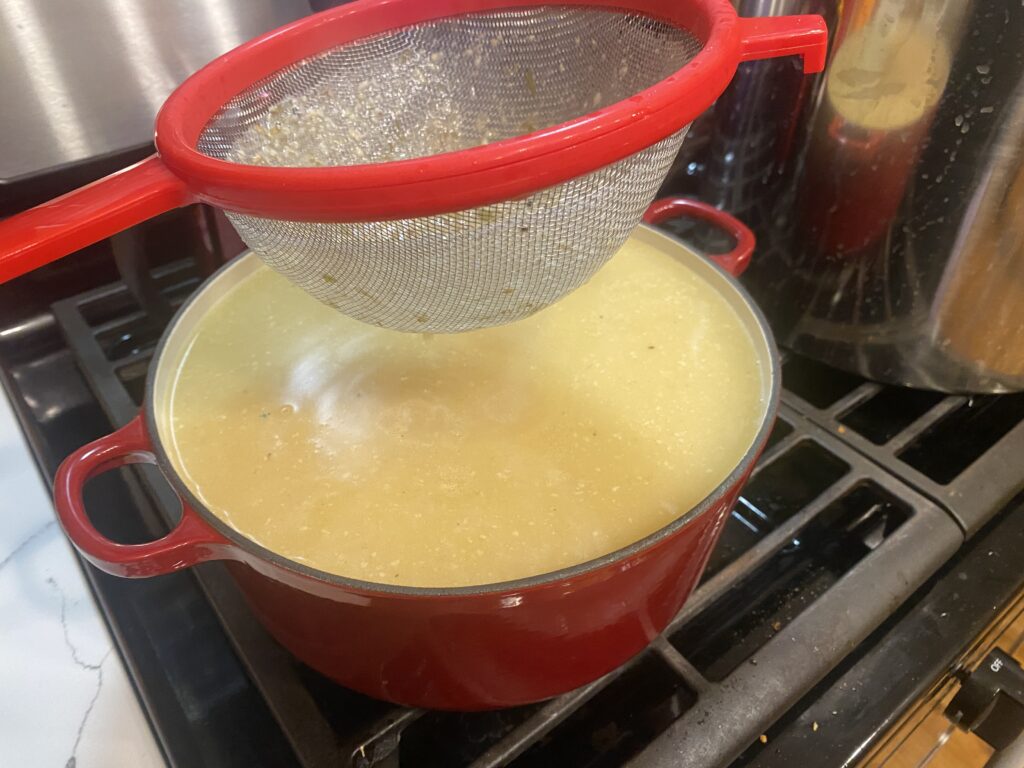
Now rinse out your stock pot just to be sure nothing is lingering on the edges. Now I use a finer mesh strainer to pull out the small pieces as I put them back into the large pot.
Again, if you are using it right away, the second straining is not really needed, but if canning, you want the stock as clean as possible.
Condense
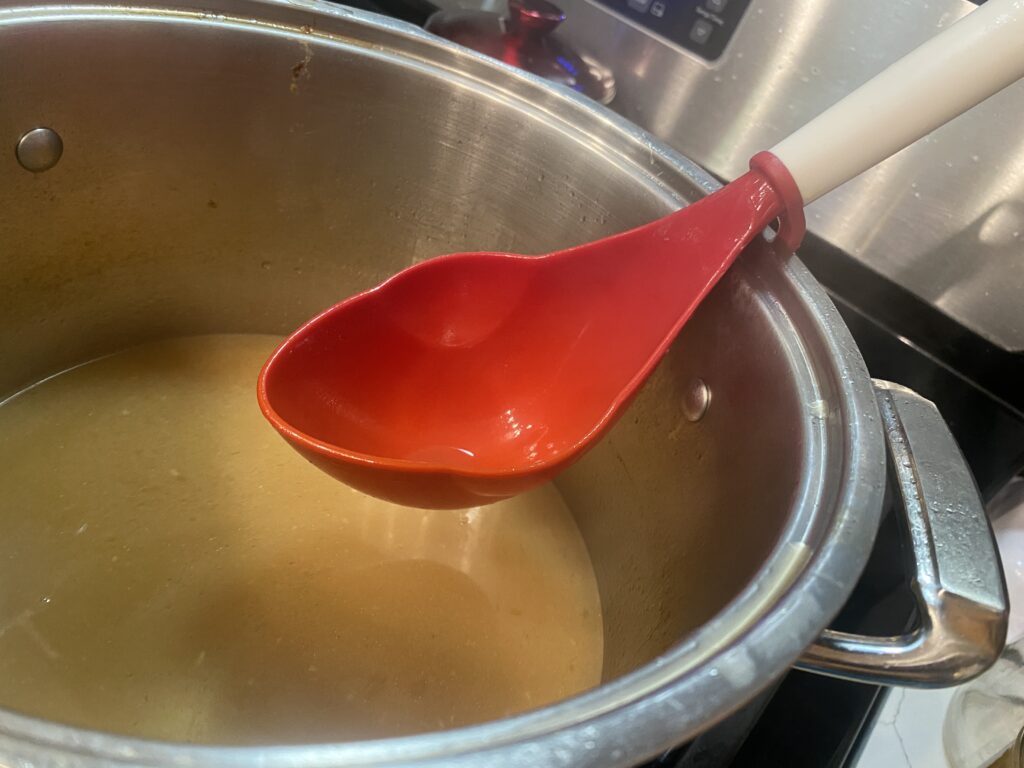
Now you get to see where the stock actually stands. Give it a taste and remember that you’ve likely added additional water throughout the process. If it doesn’t have a strong enough flavor or the flavor you’re going for, put the stock on a light boil to reduce it.
Done!
Congratulations! You’ve made stock. Now you can use that recipe you’ve had buzzing around in your brain. It will keep in the fridge for 3-4 days, or you can can it for long-term pantry storage.
Frequently Asked Questions
Are broth and stock the same?
They are not. Broth is made chiefly from meat & stock is made from the bones. Stock is also cooked much longer and condensed to create a much richer flavor. In vegetables that are basically the same, the stock is cooked longer to concentrate it.
Once you start using and making your own stocks, you get a bit spoiled by the flavor. Whenever making a broth from fresh chicken for something like chicken and dumplings, I end up reducing it or adding Homemade Bouillon to enhance the flavor.
Why don’t you salt stock?
Given the richness of the stock, adding salt isn’t necessary to enhance the flavor. Therefore, you are cutting back on sodium as well.
Do I have to remove fat when making stock?
Not at all. Especially if you are using it right away for a specific recipe, however, the fat can cause a poor seal when canning, as it can get between the lid and the jar.
Is chicken stock healthy?
Yes! While you will need more than stock to survive and stay healthy, making rich stock from vegetable scraps yields a low-fat & low-calorie option. It will also contain protein, vitamins, and minerals.
My stock isn’t clear. Is that ok?
Yes. As long as you simmered for the correct amount of time, it’s ok, it isn’t clear. I condense mine down so much for flavor that it is never perfectly clear. Unless you’re making a consommé that requires clear stock or broth, you’re good to go!
How can I make my stock more clearer?
I need to disclose that I have never tried this myself. I prefer recipes that are not so hard on you! However, I have read that you can mix egg whites with water and pour them into your stock while it boils. Then you can pull the strainer out of the cooked eggs. Some swear they can taste the egg in the stock, so perhaps pull out a small batch and try it there first.
Small Steps. Meaningful Rewards.
📤 Share the Knowledge
Know someone who could benefit from this article? Share it and help another gardener grow with confidence.
Gardening is better together. Join our free Facebook community to ask questions, share your progress, and learn alongside other gardeners.
📖 Related Articles
Canning Stocks & Broths
Now turn your homemade broth or stock into a shelf-stable pantry staple with this beginner-friendly pressure canning guide. Save freezer space and have broth ready whenever you need it.
Canning 101
Want to learn more about canning? Canning 101 is your complete beginner’s guide to home canning, covering equipment, safety, water bath canning, pressure canning, and the essential skills needed to preserve food with confidence.
Homemade “Chicken” Bouillon
Skip the store-bought cubes and make your own homemade bouillon with simple ingredients you can control. Learn how to create a flavorful seasoning that’s perfect for soups, stews, sauces, and everyday cooking.
🛠️ Product Links
This page contains affiliate links. If you purchase through one of these links, we may earn a small commission at no extra cost to you.
Thank you for helping support Small Scale Homestead!
Pressure Canner
Ready to make your homemade stock shelf-stable? A pressure canner allows you to safely preserve low-acid foods like stocks and broths for long-term pantry storage.
Canning Kit
A basic canning tool set makes filling, handling, and removing hot jars much easier and saves you from trying to improvise with whatever happens to be in the kitchen.
Canning Kit
A good set of kitchen tools comes in handy long before the stock reaches the canner! This colorful silicone set includes everyday tools for stirring, scooping, and cooking, and is heat-resistant up to 425°F.
Leave a Reply