
Summer is winding down, the garden is looking a little tired, and you may finally be reaching the point where you’re no longer finding zucchini on the counter, in the refrigerator, and possibly haunting your dreams.
It must be fall garden cleanup time! Yea. I’m not excited either. It’s ok.
What fall garden cleanup actually looks like depends heavily on where you live. If you’re in a colder growing zone, you may be shutting down the vegetable garden for winter. If you’re in a warmer climate like mine, you may be cleaning up summer plants just to turn around and plant another round of vegetables for fall.
Either way, take a deep breath. The craziness of constant harvesting, pruning, cooking, canning, freezing, and wondering what the heck you’re going to do with ANOTHER cucumber is finally slowing down. Sigh.
Now it’s time to roll up your sleeves and give the garden a little attention.
Before you start ripping everything out, though, look around. Is anything still producing? If it is, let it keep going! Harvest what you can and preserve the last of your summer harvest. Fall cleanup doesn’t mean everything has to come out at once.
Save Seeds. If You’re Into That.
If you want to save seeds for next year’s garden, now is a good time to start.
Those vegetables that got a little too ripe before you harvested them or the ones you’re simply so sick of eating that you’d happily never see another until next year are great candidates. They volunteer as tribute!
Just remember that seed saving isn’t always as simple as pulling out a seed and tossing it into an envelope. Tomatoes, for example, may require fermentation before you clean, dry, and store the seeds. And you’ll want to know whether the plant is a good candidate for seed saving in the first place.
Personally? I don’t save every seed I possibly can. Sometimes saving $3 on next year’s seed packet isn’t worth spending an hour doing something I don’t enjoy. Your time counts too. Use it wisely!
Save the seeds you want to save or the easy ones, then buy the rest. Nobody from the Garden Police is coming.

Remove Annual Plants That Are Finished
Once an annual plant has officially given up for the year, it’s time to let her go. Depending on your climate, that might mean your entire vegetable garden or just parts of it.
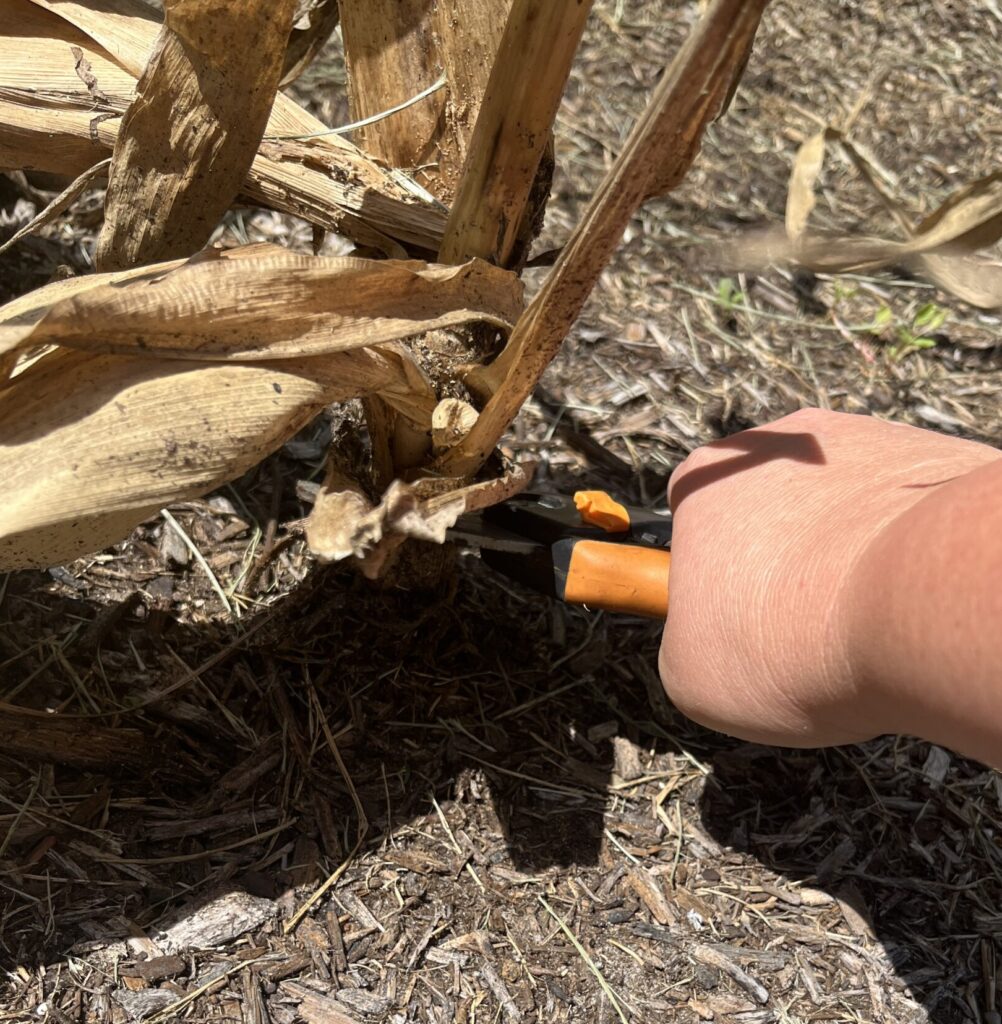
If you practice no-till or low-till gardening, you don’t necessarily have to yank healthy plants out by the roots. Cut the plant as close to the soil line as possible and leave the roots in place.
Those roots will gradually decompose underground, returning organic matter to the soil while leaving behind tiny channels that can help with soil structure.
A sturdy pair of garden shears makes this MUCH easier, especially once stems have gone from “Oh, that’s a cute little tomato plant.” to “Apparently I’m cutting down a small tree.”
If a plant is diseased, however, cleanup is different. Remove infected plant material rather than leaving it in the bed, where some pathogens may survive in plant debris and cause problems next season.
Test Your Garden Soil, If You Need To
Does everyone need a soil test every fall? Nope.
If your garden grew well, plants looked healthy, and you didn’t notice major nutrient problems, you probably don’t need to worry. But if your garden struggled this year, a soil test can help you figure out what was actually going on instead of playing:
“Which bag of garden stuff should I throw at the dirt?”
You can have your soil professionally tested through a university or Extension-associated soil laboratory, use a private soil-testing service, or purchase an at-home soil test kit.
Home kits may not provide the same level of analysis as a laboratory test, but we’re not managing 4,000 acres of commercial corn here either. Choose the level of information that makes sense for your garden and your budget.
Links for home and mail kits are below in recommended products.
Give the Soil Back What It Needs
Once you know what your soil actually needs, amend it accordingly. This is where more is definitely not always better.
If your soil is low in a particular nutrient, you can choose an amendment that supplies it. If a heavy-feeding crop depleted an area, that may also influence how you prepare the bed for whatever comes next.
But don’t automatically dump a little of everything onto your garden because “fertilizer is good.”
Too much of certain nutrients can create problems, just like too little can. Soil tests are particularly useful because they let you supplement what your garden needs instead of giving it a nutrient buffet and hoping everybody behaves.
I have a full guide to supplementing garden soil organically, but a few common options include:
| Soil Amendment | What it adds | Why you’d use it |
| Bone Beal | Phosphorus & Calcium | Supports strong roots, flowering & fruit development |
| Blood Meal | Nitogen | Encourages leafy green growth or corrects low nitrogen |
| Perlite | No significant nutrients | Improves drainage & Aeration: helps prevent soil compaction over time |
| Fish Fertilizer | Nitrogen, minerals & proteins for plants & beneficial microbes in your soil | Promotes green growth, but bet on overall soil health in a no- or low-till garden. |
Prepare Perennials and Plants You Want to Overwinter
Not everything has to go!
True perennials such as strawberries and many perennial herbs and flowers, like roses, may simply need a little cleanup and preparation for colder weather.
Strawberries, for example, don’t need to be scalped bald. Unless you’re mad at them. Then by all means… Seriously though, just remove dead or diseased pieces as needed and prepare them for winter based on your climate.
Peppers are a slightly different story.
Pepper plants are frost-tender and are generally grown as annuals in climates with freezing winters. However, gardeners can sometimes overwinter healthy pepper plants by protecting them from freezing temperatures or bringing them indoors.
Gardeners in warmer zones, like my Zone 8b, can prune and leave them in the ground over the winter. Just cover them when a freeze comes. Longer freezes can still kick them in the pants, so proceed at your own risk. Texas Snow-vid survivors know what I mean! Nothing in my yard other than my ancient roses lived through that kind of crazy. I’m entirely too Southern for that!
Basically, what you need to do depends heavily on both the plant and your growing zone. This is one of those times when “fall garden advice” from somebody 1,500 miles away may be completely useless.
Look up recommendations for the specific plant and your local climate before you start hacking away with pruning shears.
Compost What You Can
Don’t throw all that healthy plant material away! Composting doesn’t have to mean throwing kitchen scraps in the yard, where they get stinky and attract animals and bugs. Finished annuals, trimmings, leaves, and other healthy garden debris can become next year’s compost.
You don’t necessarily need some elaborate composting command center, either. Depending on your space and method, a simple compost pile, bin, tumbler, or suitable container may work. Heck, use a trash can! Cutting larger plants and long stems into smaller pieces can help them break down more efficiently.
One important warning: inspect plant material before adding it to a typical backyard compost pile.
If a plant had obvious disease or was heavily infested with pests, I wouldn’t add it to a basic home compost pile. Properly managed hot compost can destroy many pathogens, but many backyard piles never consistently reach the necessary temperatures.
Healthy plants? Compost away. Not so much? Dispose of them.
Or Leave Healthy Plant Cuttings Right in the Garden
You don’t have to move any of it.
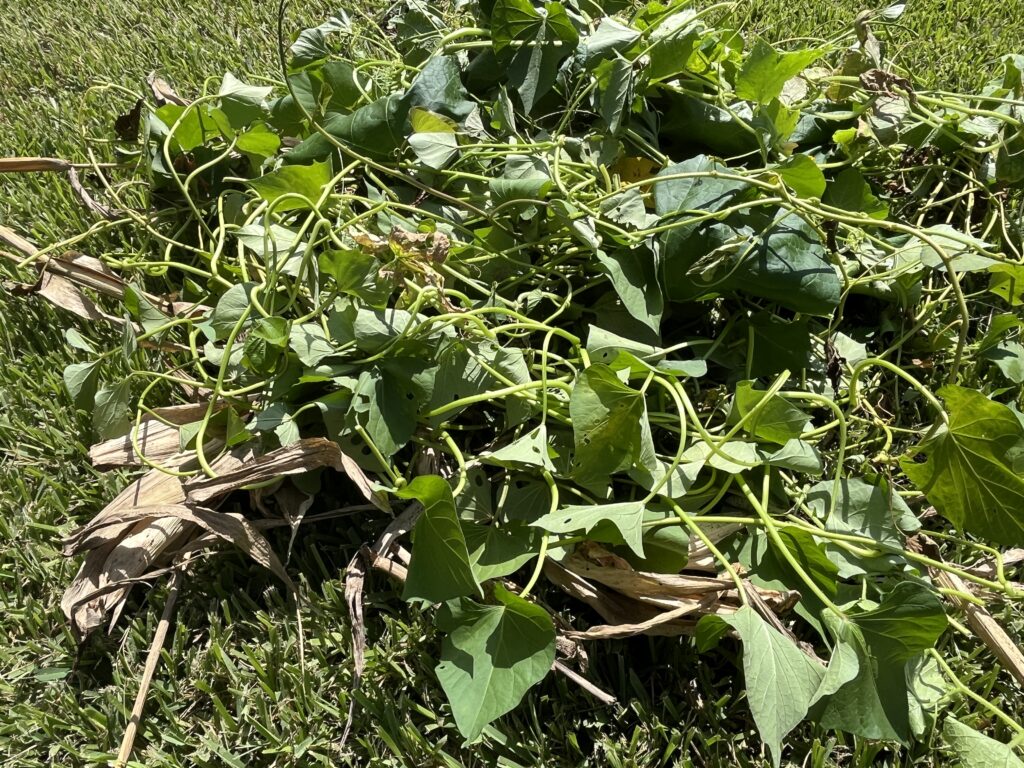
You can cut healthy garden plants and stems into smaller pieces and leave them on the soil surface to decompose. Congratulations. You have just discovered the incredibly sophisticated gardening technique known as:
“Cut it up and leave it there.”
Okay, yes, there’s slightly more science involved, but it’s still pretty satisfying to just toss it down and walk away.
As that healthy plant material decomposes, it returns organic matter and nutrients to the garden. Leaving roots in place and keeping soil covered also fit nicely into a low-till or no-till approach.
Cut bulky stems into manageable pieces and break up large leaves so you aren’t trying to plant through a vegetable graveyard next spring. This is basically mimicking the Circle of Life in the plant world.
Protect Bare Soil With Mulch or Cover Crops
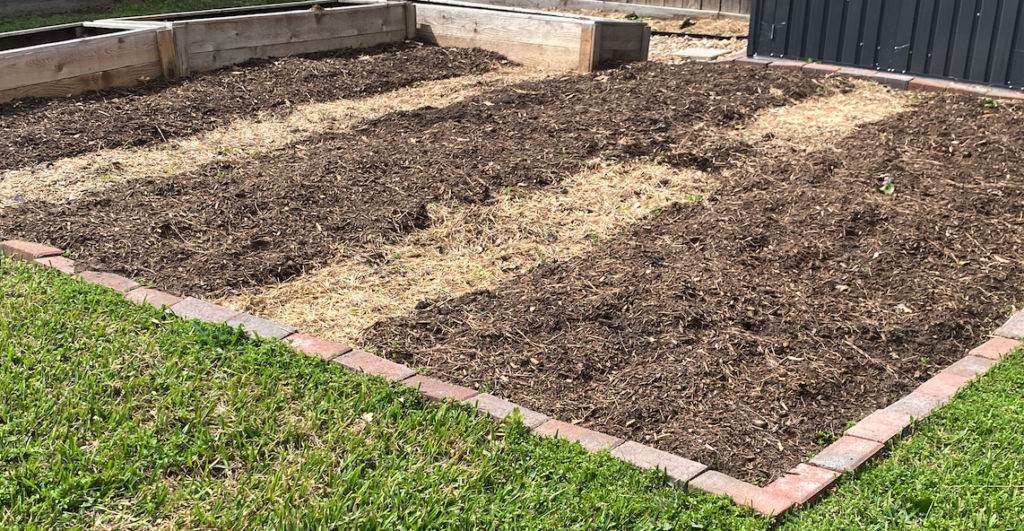
Once you’ve removed finished plants and added any necessary soil amendments, protect the soil. Bare soil is vulnerable to erosion, nutrient loss, weeds, and weather.
Using Mulch
And no. You don’t need fancy mulch. Depending on what is available in your area and appropriate for your garden, you may be able to use:
-Leaves
-Pine needles
-Straw
-Untreated wood chips
-Grass clippings
-Other clean plant material from your yard
If buying mulch is easier, buy mulch! Just pay attention to what you’re actually purchasing and choose a material appropriate for a vegetable garden, especially if you’re growing organically.
You can also plant a cover crop.
Cover crops can protect bare soil, add organic matter, suppress weeds, and, depending on the crop, help with soil structure or nitrogen management. Meaning fewer supplements needed!
Some are even edible. A plant that protects my soil, improves the garden, and potentially feeds you? Now we’re just showing off.
| Cover Crop | Main Benefit | Extra Benefits & Uses |
| Field Peas | Fixes nitrogen | Shoots, tendrils, and peas can be edible depending on variety |
| Daikon / Tillage Radish | Helps break up compacted soil | Roots and greens are edible if using a food variety |
| Red Clover | Fixes nitrogen | Supports pollinators; flowers and leaves are edible |
Clean and Take Care of Your Garden Tools
Your garden tools worked all summer. Return the favor so you can stay friends.
Remove dirt and plant debris from pruners, shears, shovels, trellises, cages, and other equipment. Garden pathogens can hitch a ride on tools and supports, so cleaning and sanitizing when appropriate can help prevent disease from moving from one season to the next. You can mix water & isopropyl alcohol in a 1:1 ratio for quick sprays and wipe-downs, but you should use pure alcohol if dealing with infected items. Just add it to a spray bottle & voilà!
Sharpen dull blades. Oil tools and moving parts that need it. This deals with rust before it becomes a science experiment. Or worse, shears that won’t open or have screw heads falling off. Been there.
And clean the harvesting tools especially well. They’ve spent months touching plants, soil, mystery goo, insects, and Lord knows what else.
I’ve seen the spiders in my garden. I’m not taking chances!
Plant Cool-Season Vegetables If Your Climate Allows
Who says fall garden cleanup means you’re finished growing food?
If you live in a warmer growing zone, fall may be the beginning of an entirely new growing season. Where I live, some plants actually do better once summer finally stops trying to cook everything alive.
Depending on your climate, fall may be a great time for crops such as:
-Broccoli
-Cabbage
-Peas
-Leafy greens
-Radishes
-Cool-season herbs
-Other cold-tolerant vegetables
Even cover crops count. Growing edible peas where you grew a heavy-feeding summer crop like corn? Yes, please!
Just remember that your fall planting dates depend on your location, expected frost dates, and the crop you’re growing. Don’t use the calendar alone. Check recommendations for your growing zone and local climate.
Take Five Minutes to Review the Season
Before you officially call the summer garden done, take a few minutes to look back and note what you learned. I honestly don’t mean mental notes either. Write it down in a journal, spiral, or composition notebook.
What grew ridiculously well?
What barely survived despite your best efforts?
What did you plant WAY too much of?
What did you wish you’d planted more of?
Which variety earned a permanent place in next year’s garden?
Was there a certain spot that got too much or too little sun as the season progressed?
And which plant is never again receiving another square freaking inch of your precious garden real estate? Like, ever!
Write it down.
Trust me. Six months from now, you’ll remember that you hated something about that tomato variety, or wanted to move something…somewhere??
You will absolutely not remember what it was. Be kind to your future self.
(Shameless plug below for my Garden Journal!)

Keep your garden organized from season to season with this beginner-friendly gardening journal. Track planting dates, garden layouts, harvests, expenses, and notes all in one place to help you learn from each growing season and grow a more successful garden.
Fall Garden Cleanup Doesn’t Have to Happen in One Day
I know, I know. That sounded like a lot. I get it! If, like Shaboozey, you need some good news…. I got you!
You don’t have to do it all today. You don’t even have to do it all this weekend.
As summer winds down, start watching individual plants. When something is finished, deal with it right then. Harvest the last vegetables. Cut down one plant. Clean one bed. Add some compost. Plant something new.
One job at a time. By the time fall really arrives, you may discover that half of your fall garden cleanup is already finished.
And Labor Day happens to land right around garden-transition time for a lot of us.
Fire up the grill. Invite over friends or family who owe you a favor. Put the teenager who got themselves grounded to work. Suddenly, you’ve got an entire garden crew. Just saying.
Work smarter, not harder. 😂
Small Steps. Meaningful Rewards.
📤 Share the Knowledge
Know someone who could benefit from this article? Share it and help another gardener grow with confidence.
Gardening & Homesteading are better together. Join our free Facebook community to ask questions, share your progress, and learn alongside other gardeners.
📖 Related Articles
Give Your Garden Soil a Little TLC
Your plants have been eating all season. Learn what common soil amendments provide and how to figure out what your garden actually needs.
Don’t Forget the Tool TLC!
Before you shove everything in the shed and forget about it until spring, clean, sharpen, oil, and store your tools so they’re ready for next season.
Put Your Garden Soil to Bed
Not planting again right away? Cover crops can protect bare soil, suppress weeds, and add organic matter while your garden takes a break.
Leave a Reply