
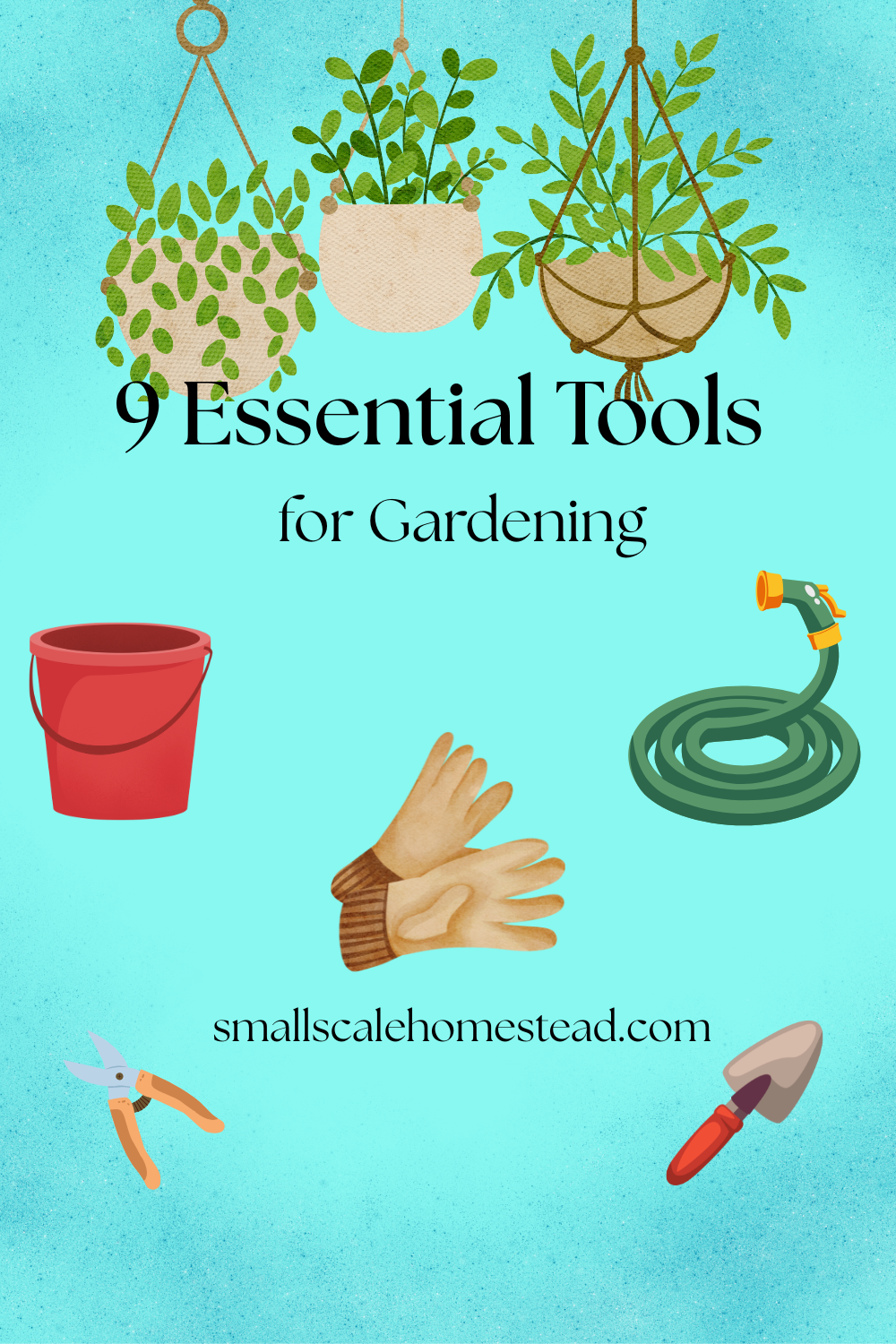
Everyone will have differing opinions on what is or isn’t needed, whether online or in person. If you’re reading this, it likely means you’re new to gardening. Welcome! I’ve put this list together with you in mind. Until you know how much you will love the process, how big your garden or beds will be, how much time you will spare, etc., let’s start with the basics. In my opinion, these are the only tools a gardener needs. The rest are optional.
After these, the need becomes more situational or a matter of personal preference for you. There is a “Notes” section at the end that will go over some of the various other items you may or may not need once you’re elbow deep in the dirt for the long haul!
Gloves
So not everyone will need gloves. It’s mostly a personal choice. I have several pairs, but really only use them for major jobs, such as shoveling large amounts of mulch or supplementing with compost.
The only expensive pair I have, which is still under $40, is a pair of leather gloves. These I use for my roses in the front yard. When you go into the ring with rose bushes —aka pruning them for the year —leather gloves are the best way to protect your hands from those thorns. Cloth gloves won’t stand up to them.

Trowel or Hand Shovel
Bigger may be cooler, but small-scale gardeners may not need a full-sized shovel. Granted, they are helpful in a larger yard or on the rare occasion you do a large job; however, you will find yourself using the little guy much more often!
Weeding, digging, scooping, filling pots, planting. The Hand trowel is in use in my garden more than three times as much a the big guy.
If you’re just getting started & testing the waters of gardening, save that space and the money. Start small!
Pruning Shears
One of the most used tools in my arsenal! Despite the name, they’re for more than pruning. I use them for harvesting all season! It’s easier and less damaging to most plants to snip the veggie off than to twist or pull on the branches or vines.
You can use them for actual pruning, of course, but you can harvest bean pods, peppers, herbs, and tomatoes quickly and easily. You can even get small pairs that slip into your pocket as you wander the garden, doing any chore you have in mind. Then pull them out when needed, and back into the pocket they go.
Quick and simple!

Tags / Plant Labels
You won’t remember, be nice to your future self. Unless you’re only planting a few things, you really won’t remember. Then some plants look so much alike as lil babies that even if you knew before, you may not be so sure now. Zucchini and squash look virtually identical. Cucumber plants look strikingly simple when they are fresh sprouts. Trust me. Label those ladies!
It doesn’t have to be anything expensive or fancy. Some kits and seed trays come with a small bundle, which is helpful. You can also use popsicle sticks. These can also be put into a compost pile of old plants you’ve cut or pulled up.

Twine or Ties
You won’t need these for all plants, but for some, you will—plants like tomatoes, berries, etc. I’ve had issues with the pepper plant branching off and trying to fall over. You can put a small bamboo stick in the ground near the main stem and tie it back; problem solved!
Twine is the best option since it’s plastic-free and readily available. These small plastic clips, however, are my favorite. They are convenient and you can stick a few in your pocket when walking around the garden, just in case!

Tool Belt
To hold everything above! If you start researching or watching videos, you may find people mentioning garden belts. They are really great! While I don’t use one every day, during high planting and harvest seasons, it is very convenient to have everything right there at your fingertips.
Having the belt can also help you keep all of your tools in one place. Keep it hung by the door, or somewhere near your garden. If you don’t want to use it daily, having it will give you a designated place to always return your tools for safekeeping.
My tip? Don’t research “garden belts”. Search for “small tool belts”. You will pull up a selection of types with varying loops and pockets until you find the one that will work for you. Likely for half the cost or less!


Adjustable Sprayer Nozzle
Seems like a no-brainer, but grabbing a shower setting only the nozzle is easy to do. The adjustable type is one of the few places I will always recommend spending more. The shower setting may be most common, but the others can really come in handy!
The mist is great for a try full of seeds & watering delicate sprouts. The full is a high-pressure stream that is great for getting rid of the dirt on your porch, when you inevitably get it everywhere. And so on!

Hoses
I recommend you get two types. A “regular” hose and a soaker hose (or two!). The regular is obvious, but soaker hoses are a great way to water a bed or row slowly and deeply, helping promote deep roots. The water seeps from the seam at the length of the soak and slowly soaks into the ground, wasting much less water!
They also help with disease-prone plants, and people will recommend that you “water from the bottom”. Leave them where you water regularly, hook up your regular hose when needed, and set a timer. I usually let it go 20-30 minutes while doing other odd jobs in the yard or garden. You can rotate watering certain beds on different days so you’re only watering a few beds at a time, a couple of times a week.


Buckets, Cart, or Containers
Uuum…what? Well, you’ll need something to mix soil, especially when it’s seed starting time and time to supplement your beds or rows at the end of the season. The size you need depends on your garden. You may well be able to get away with a five-gallon bucket. These are readily available at home improvement stores.
However, for a larger garden, you may want to invest in a wheelbarrow or a 4-wheel cart. These are nice to tote bags of mulch or compost from the driveway to the garden as well.
It really depends on your needs. If you’re testing the waters, start small! However, I do not recommend using the plastic totes we all use for storage. After 1 season outside, in the sun or not, they start splintering and cracking because they are just not made for the outdoors.


Conclusion
There are many cool gardening gadgets and tools these days. For everything, really. While they’re cool to look at and may even work, I repeatedly find myself going back to the “tried and true”, old-fashioned items. Yes, there is a bit of modern thrown in there, too, but most of the time, simple is best.
Also, simple usually means cheap. Cheap = Yay! When you’re a mom, you’re busy enough. With a full house and an even fuller schedule, why worry about keeping up with the next cool, trendy things? Let’s simplify your life as much as possible.
Here is a list of the bare necessities for having and keeping a garden. Be it veggie, flower, or both! The great part? A price range already exists for every item below. So, as always, gardening becomes a choose-your-own-adventure!
Honorable Mentions:
Here are a few other items you may need for a larger garden, easier upkeep, or just cause you wanna! It is up to you, your situation, and your finances.
Large shovel. This is handy once your garden gets bigger or you have multiple beds and need to supplement at least once a season. This will get the job done in a fraction of the time, but obviously takes up more space.
Quick Connect for the hose and all attachments. These come with two hose ends and 4 or 5 attachments, such as spray nozzles or sprinklers. I keep them on everything, including the soaker hose in the garden. They make quick accessory changes possible in seconds! I LOVE them!!


For irrigation, you can get some really neat, low-cost systems that will spray your beds, and even set up a timer to do it on a schedule!
Garden seat. This is great for people with health issues or even just bad knees. They come in many options but tend to be lightweight for mobility, and many include a built-in tool belt!
Posts, trellis, bamboo. Depending on what you grow, you will most likely need some of these items eventually. There’s no rush until you feel out what is going to become “your system,” but these items are most definitely helpful
Garden Fork. These are great for loosening soil and aerating your garden. I use mine all the time!

Shed. Ah, the “she shed”. Once you’ve gone garden-crazy, you will need somewhere to store literally everything on this list, plus a ton of things not on it. You can also store supplements, fertilizers, and extra bags of soil. Luckily, there is a wide variety of sizes, shapes, and styles for garden or storage sheds. Happy hunting!

Until Next Time!
PJtxGirl
Did you find this helpful? Share with your friends!
Leave a Reply